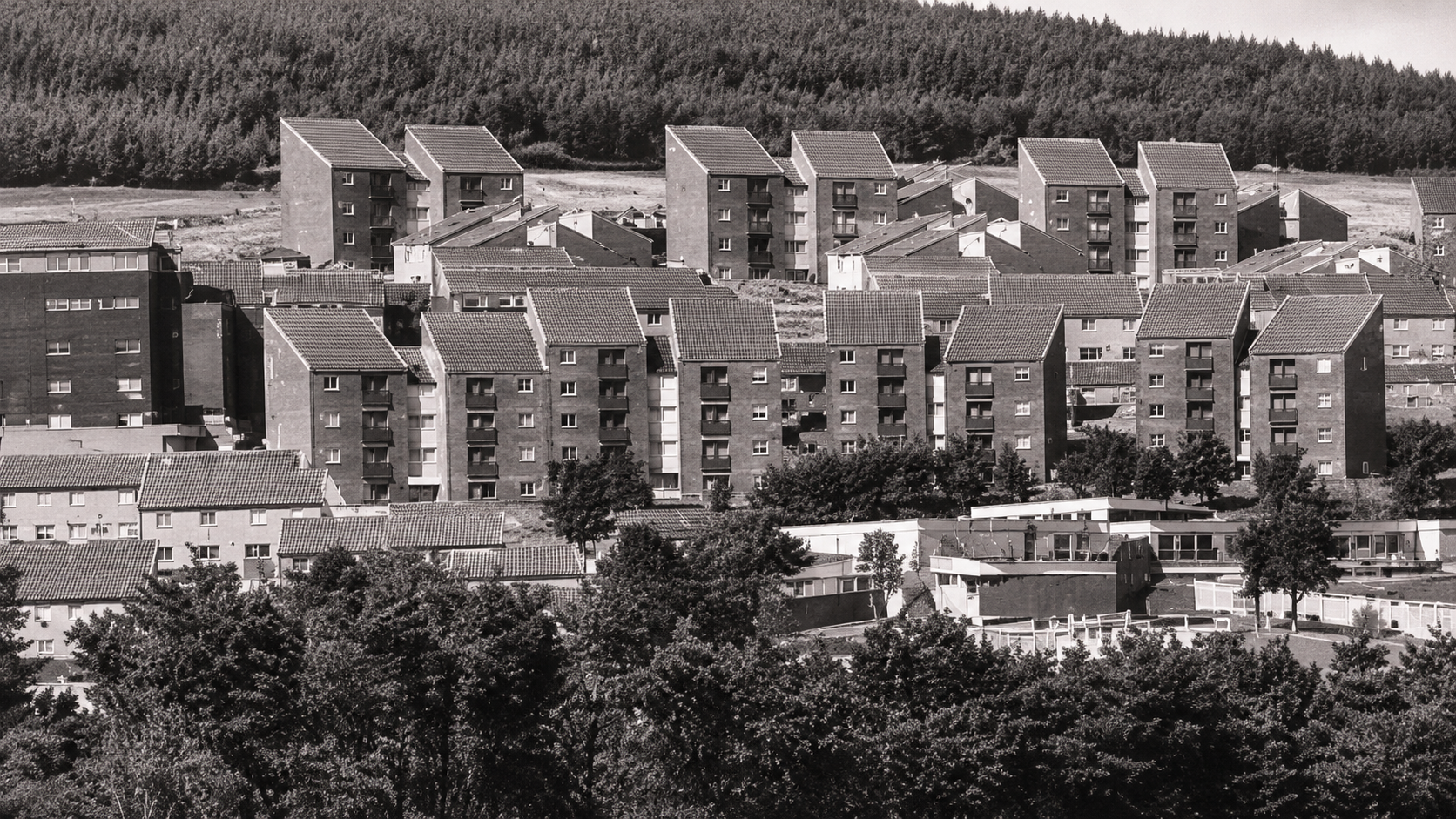
The Continuing Regeneration of Penrhys
Professional Recommendations from a Construction and Sustainable Development Perspective
Carl Parry | November 2026
Penrhys is a place with which I have both a personal and professional connection.
I grew up in Penrhys during the 1980s and subsequently spent more than two decades working within construction, surveying, project delivery and sustainable construction. When plans for the continuing regeneration of Penrhys began to develop, I therefore followed them with considerable interest.
The paper published here grew from a simple question:
Could the regeneration of Penrhys achieve more than the replacement and improvement of its housing?
My conclusion was that it could.
The paper sets out six professional recommendations examining architectural identity, integrated community energy, Welsh construction and manufacturing, landscape and water management, community infrastructure, and the opportunity to bring these elements together as part of a more integrated approach to regeneration.
This proposal was offered before it was published
It is important to explain the circumstances in which this paper is being made public.
This was not originally written as a retrospective criticism of the Penrhys regeneration.
Before publishing it, I attempted to contribute these ideas directly to the development itself.
Earlier proposals and observations were shared with Trivallis, and the completed professional paper was subsequently submitted through the appropriate professional channels, including to Welsh Government.
The intention was straightforward: to offer the recommendations for consideration while there remained an opportunity for them to contribute to the continuing development of Penrhys.
Despite those approaches, I received no substantive engagement with the proposals.
I have therefore decided that the paper should no longer remain private.
Why publish it now?
The regeneration of Penrhys is progressing and will ultimately produce a physical development that can be seen, experienced and assessed.
Publishing this paper alongside that process creates something potentially useful: a contemporaneous record of an alternative professional approach.
As the development progresses, it will therefore be possible to compare what was ultimately delivered with some of the additional opportunities that could have been explored.
That comparison is not intended to suggest that every recommendation contained within this paper could or should have been adopted. Construction and regeneration are constrained by finance, planning, engineering, procurement, land, policy and numerous other practical considerations.
But those constraints should not prevent alternative ideas from being placed into professional discussion.
Some of these recommendations may ultimately appear within the development. Others may not. Some may prove applicable elsewhere rather than at Penrhys itself.
Their value can be judged accordingly.
More than a housing development
My central argument is that regeneration on this scale creates an opportunity extending considerably beyond the construction of individual homes.
Architecture can preserve identity.
Energy infrastructure can serve communities rather than individual properties alone.
Construction procurement can support Welsh manufacturing, skills and supply chains.
Landscape can become functioning infrastructure for water management, biodiversity and recreation.
The physical environment can create opportunities for community life.
And individual construction decisions can be considered according to the environmental, economic and social value they create collectively.
Penrhys was originally conceived with ambition.
My belief is that its continuing regeneration provides an opportunity to build upon that ambition using the technologies, knowledge and industrial opportunities available today.
The attached paper sets out how I believe that could have been approached.
I am publishing it now so that those ideas are available to residents, construction professionals, policymakers and anyone else interested in the future of Penrhys to read, consider and judge for themselves.
Carl Parry
Foundation Degree in Sustainable Construction Management & Surveying
Read the full paper: